Guide
CSV to FHIR Mapping: A 2026 Guide to Tools and Best Practices
Master CSV to FHIR mapping in 2026 with practical tools, compliance checks, and validation strategies for regulated healthcare data interoperability.
- Published
- Reading time
- 5 min

The fastest path to interoperability is validating your schema before upload. I recommend using a bulk import tool that supports direct row-to-resource mapping with explicit LOINC codes. This reduces validation errors by catching structural issues before data leaves your spreadsheet.
Key takeaways
- Validate FHIR resources against the R4 profile before bulk ingestion.
- Use explicit LOINC codes for clinical observations to ensure semantic interoperability.
- Prefer tools that handle schema drift and legacy column naming automatically.
Why is FHIR Mapping from CSV More Important Than Ever in 2026?
Regulatory pressure and payment models now demand real-time data exchange. You cannot rely on static ETL pipelines that break when partner file schemas shift. In 2026, payers and providers expect immediate ingestion of clinical data for value-based care reporting.
We see this in onboarding. When a new lab partner sends a flat file, manual mapping takes weeks. Automated mapping cuts this to days. It ensures that fields like patient.id or observation.code match the FHIR Resource profile exactly. This is not just about format; it is about semantic correctness. If you map a lab result to a string instead of a CodeableConcept, downstream systems cannot reason over it.
How Do I Understand the FHIR Data Model for CSV Mapping?
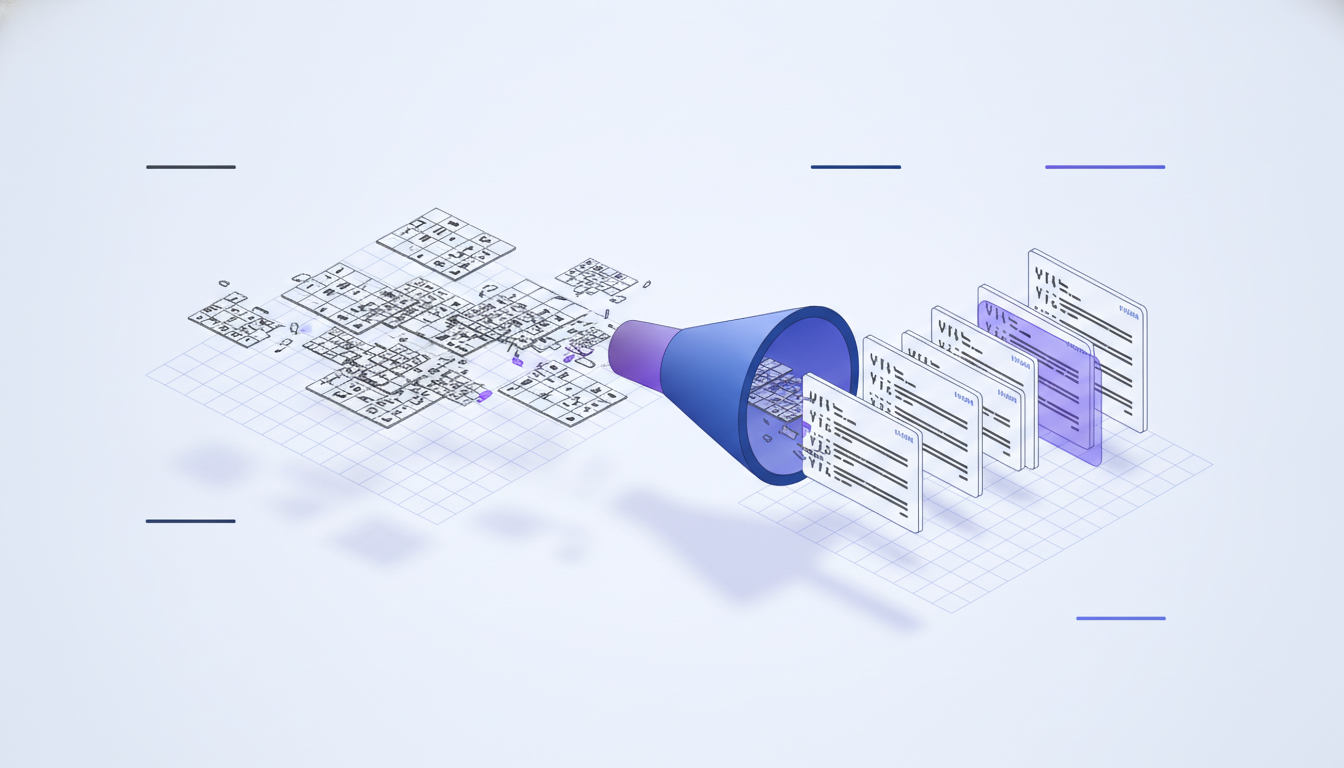
CSV files are flat, but FHIR is nested. You must decide which CSV columns map to FHIR elements and which require transformation. The key is treating each row as a potential Resource instance, such as Patient, Observation, or Encounter.
Start by identifying the primary resource. If your CSV contains lab results, map row.id to Observation.identifier and patient_ref to Observation.subject. The HL7 FHIR SANER guide outlines how situational awareness measures often use CSV for rapid deployment, but you must adhere to standard profiles for clinical data. Do not force complex data into single cells. If you have multiple diagnoses, use a repeating section or separate rows to respect cardinality rules.
What Is the Step-by-Step CSV to FHIR Mapping Process?
Begin with a schema audit. Check every column for data types: dates must be ISO8601, codes must include system URIs. Next, define your mapping rules in a configuration file or interface. Finally, run a dry-run validation before sending data to production.
- Audit: Scan for empty required fields (e.g.,
Observation.status). - Map: Assign CSV headers to FHIR paths (e.g.,
col_a->Patient.name). - Validate: Use a FHIR validator to check against the R4 profile.
- Upload: Execute bulk import via API or direct interface.
This process prevents silent failures. I once saw a migration stall because date formats mixed MM/DD/YYYY with YYYY-MM-DD. The validator caught it, but the pipeline did not. Always enforce type checking at the ingestion point.
Which FHIR Mapping Tools Work Best in Late 2026?
Tools vary by control versus speed. Some offer drag-and-drop interfaces, while others require JSON configuration. For regulated data, I prioritize tools that log every transformation step for audit trails.
| Tool Type | Pros | Cons | Best For |
|---|---|---|---|
| Bulk Importers | High throughput, native support for batch operations | Limited schema logic, may need pre-processing | Large historical datasets |
| Schema Mappers | Explicit path mapping, validation integration | Steeper learning curve, setup time | Complex, multi-source data |
| DIY Scripts | Full control, no licensing costs | Maintenance overhead, error-prone | Small teams with DevOps capacity |
For bulk operations, tools like Smile CDR's CSV bulk import offer direct mapping and upload capabilities. This is useful when you have a static mapping that won't change often. For dynamic schemas, consider a dedicated API that allows you to define transformations programmatically. Avoid generic ETL tools that strip metadata unless you can restore it before validation.
How Do I Ensure Data Quality and Compliance in FHIR Mapping?
Compliance means more than HIPAA compliance; it means data integrity. Every mapping rule must be traceable. If you transform a value, log the source and target codes. This is critical for audits where you must prove how a clinical value was derived.
Use FHIR resource validation to enforce constraints. If a field is required, the tool must reject the row rather than patch it. Check code systems like LOINC or SNOMED CT explicitly. If a CSV contains 1234-5, ensure the system element is set to ` Without this, the code is meaningless.
Additionally, protect PII. If your CSV contains patient names, ensure the mapping pipeline encrypts data at rest. Do not map PII to FHIR extensions unless necessary. Standardize on Patient.name and Patient.identifier to keep the structure clean.
What Are the Common Challenges in Legacy Data Conversion?
Legacy spreadsheets often use shorthand. You will find columns named DOB instead of birthDate, or pt_id instead of Patient.id. These naming mismatches cause mapping failures.
Another issue is schema drift. A partner might add a new column next month without notice. If your mapping is hardcoded, the job breaks. Build tolerance into your system. Allow optional fields to be ignored if they are not required by the FHIR profile. This keeps your pipeline running even when upstream data changes.
Finally, watch out for date/timezone issues. Clinical events require precise timestamps. If your CSV uses local time without a zone, you must normalize it to UTC before mapping to Observation.effectiveDateTime. This prevents clinical decision support systems from misaligning events.
Choosing the Right FHIR Mapping Solution for Your Organization
Select based on your team's capacity. If you have a dedicated engineering team, a customizable API might save money. If you rely on analysts, a tool with a visual mapper reduces risk.
We find that organizations in regulated environments prefer solutions that provide clear failure codes. When a row fails, you need to know if it was a type error or a missing required field. Tools that return detailed validation reports save hours of debugging.
If you are looking for a solution that handles schema mapping for regulated data with built-in validation, explore AdaptivMapr. It is designed to handle the specific pain points of flatfile ingestion without hiding the trade-offs.
FAQ
How to map CSV to FHIR manually?
Map CSV headers to FHIR Resource paths (e.g., col_a to Patient.name) in a configuration file. Validate the resulting JSON against the R4 profile before ingestion to ensure compliance.
What are common FHIR mapping challenges?
Common challenges include schema drift, inconsistent date formats, and missing required fields. Hardcoded mappings break easily; use validation to catch errors before upload.
Does FHIR support bulk CSV import?
Yes, many FHIR servers support bulk import operations. Tools like Smile CDR allow direct mapping and upload of bulk CSV files to streamline historical data migration.
How do I validate FHIR resources from CSV?
Use a FHIR validator to check the generated JSON against the R4 profile. Ensure all required elements are present and codes include valid system URIs like LOINC.
What is the difference between CSV and FHIR data models?
CSV is flat with rows and columns, while FHIR is nested with Resources and Elements. Mapping requires transforming flat data into structured resources that respect cardinality and type constraints.