Guide
Secure Data Sharing in Regulated Industries: Architecting for Confidentiality and Compliance in 2026
Secure data sharing for regulated industries keeps raw data in place using confidential computing, PETs, and auditable controls. Architect it this way in 2026.
- Published
- Reading time
- 9 min
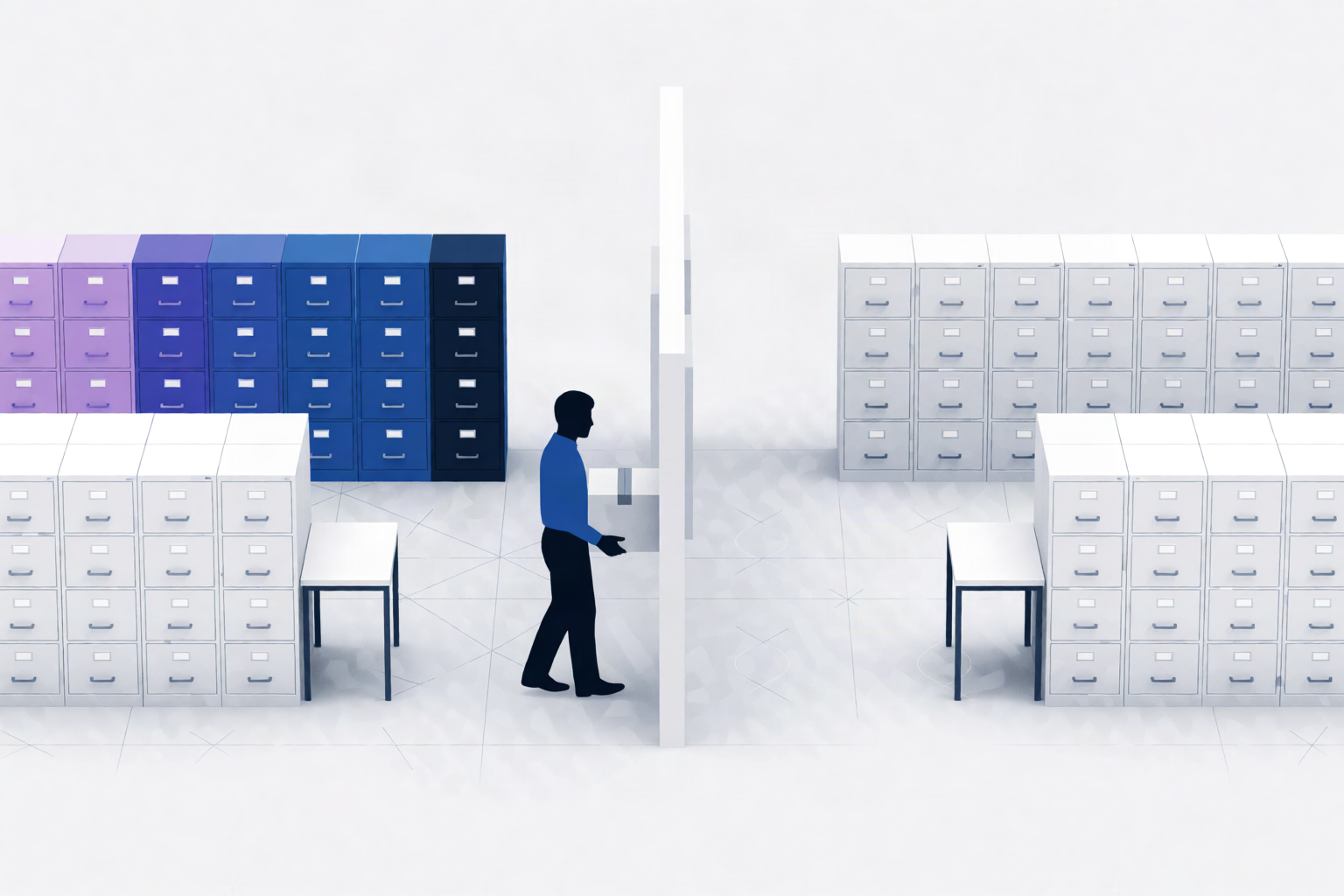
B2BSaaSStack’s 2026 guide reviews secure data collaboration platforms across privacy, AI workflows, deployment limits, and pricing. Duality’s 2026 guide enumerates nine secure data sharing strategies for regulated industries. Those options only matter if your architecture stops copying raw regulated records between organizations.
Secure data sharing in regulated industries means computing over data where it resides, under hardware-enforced isolation and policy controls that survive an audit. It does not mean emailing extracts, spinning up a shared database, or treating a vendor’s SOC 2 report as a substitute for access logs. If your current design moves PHI, PANs, or HR PII into a partner’s environment, you are building a compliance liability, not a data partnership.
Key takeaways
- Raw data should not cross organizational boundaries; compute crosses boundaries instead.
- Confidential computing and PETs reduce trust requirements but add latency and operational complexity.
- Audit logs must capture who queried what, which policy approved it, and what was returned.
- Classification, masking, and API security are prerequisites, not afterthoughts.
Why does traditional data sharing fail in regulated environments in 2026?
Traditional sharing fails because it treats data like cargo: it gets packed, shipped, and unpacked somewhere else. In regulated environments, every copy is a new attack surface and a new jurisdiction. HIPAA, PCI DSS, GDPR, and state privacy laws do not care that you intended to delete the file; they care that it existed outside the covered entity’s control.
SFTP, email attachments, and shared database credentials were built for convenience, not custody. Once a file leaves your environment, you lose the ability to enforce retention, restrict onward sharing, or prove who saw what. A business associate agreement does not fix a misconfigured bucket. The first step in any secure sharing design is to stop moving raw data and start moving queries or encrypted computations instead. This is also why data minimization in 2026 matters: the less data you hold, the less you have to protect when sharing it.
What are privacy-enhancing technologies (PETs) in 2026?
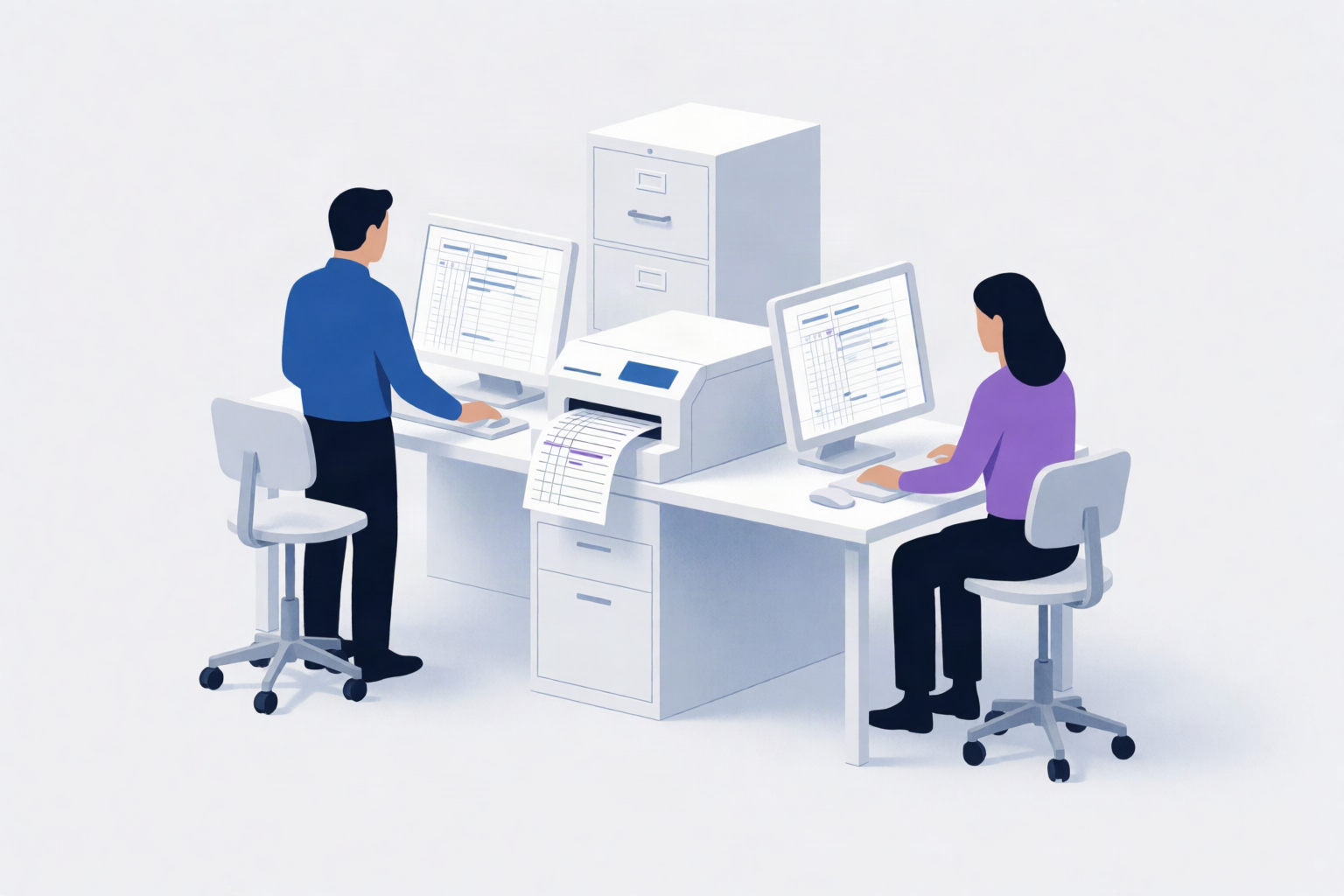
PETs are computational techniques that let parties analyze or join data without exposing underlying records to each other. In 2026, the relevant set for regulated industries includes confidential computing, secure multi-party computation (SMPC), differential privacy, and homomorphic encryption in narrow cases. They reduce trust but do not remove it; they shift it from legal contracts to code and hardware.
Each PET has a different cost profile. Homomorphic encryption is mathematically strong but often too slow for production joins. Differential privacy adds noise to aggregate results, which protects individuals but degrades granularity. SMPC splits inputs across parties so no single node sees the whole picture, but it requires heavy network round-trips. Confidential computing keeps data encrypted in memory during execution, which is usually the most practical starting point for regulated workloads. None of these tools excuse you from automated data classification; you still need to know what sensitivity level you are protecting before you pick a PET.
How does confidential computing work for data sharing?
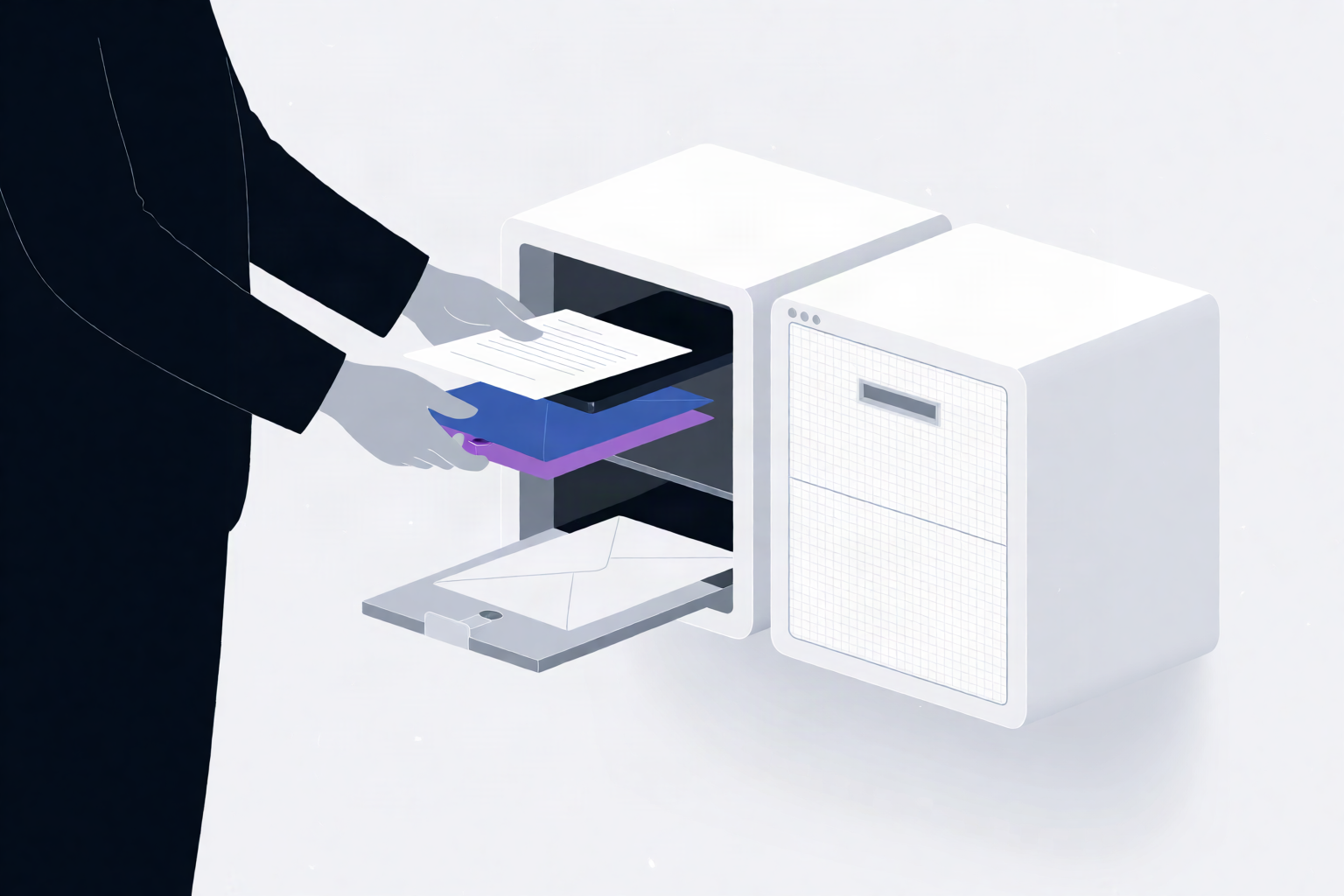
Confidential computing uses a trusted execution environment (TEE) to encrypt data in use, not just at rest or in transit. The host administrator cannot inspect memory inside the enclave, which means a cloud provider or partner infrastructure can run a job without seeing the inputs or outputs.
The request/response shape looks like this: the data owner sends an encrypted payload and a policy to the enclave. The enclave attests its identity, decrypts only inside the protected memory, runs the approved computation, and returns an encrypted result. The raw plaintext never exists outside the enclave. What gets kept is the output and the attestation record; what gets discarded is the in-memory plaintext after the session ends.
Trade-offs are real. Not every workload fits inside an enclave memory limit. Side-channel attacks remain a research concern. And attestation only proves the code running inside the TEE; it does not prove that the code is bug-free or that the policy is correct. Confidential computing is a strong control, not a compliance certificate.
How do you architect a data clean room for multi-party collaboration?
A clean room is a bounded environment where two or more parties join datasets under agreed-upon queries, with raw data never leaving the owner’s custody. The architecture separates ingestion, policy enforcement, query execution, and output release into distinct zones.
Ingestion lands data in an encrypted landing zone. Policy enforcement checks the requesting party against a whitelist before any query runs. Query execution happens inside a sandbox or TEE, and output release applies aggregation thresholds—no row-level exports, no small-cell results that could enable re-identification. Logs capture the query text, the parties involved, and the output hash.
This architecture fits use cases like hospital-to-hospital patient cohort matching or bank-to-bank fraud signal matching. It does not fit ad-hoc exploration. If analysts need raw SQL access to partner records, a clean room is the wrong tool. For a deeper look at providers and patterns, see data clean rooms for regulated industries.
Can federated learning support regulated data sharing?
Federated learning lets models train across silos without centralizing raw data. Each site trains locally and sends only model updates—gradients or weights—to a coordinator. For regulated data, this avoids moving PHI or PII, but it does not automatically satisfy HIPAA or GDPR.
Model updates can leak information about individual records through membership inference or model inversion attacks. To close that gap, pair federated learning with secure aggregation and differential privacy on the updates themselves. You also need auditability: the coordinator must log which sites participated in each round and what aggregate was produced, without being able to reverse-engineer local datasets.
Use federated learning when the goal is a shared model, not shared insight. If you need a joint report or a joined table, a clean room or SMPC is more appropriate.
Where does secure multi-party computation fit?
SMPC lets multiple parties jointly compute a function over their private inputs without revealing those inputs to one another. Use cases include joint fraud scoring across banks, patient cohort matching across hospitals, and payroll benchmarking across employers.
Under the hood, SMPC uses secret sharing or garbled circuits. Party A splits its input into shares; Party B does the same; the parties compute on shares and reconstruct only the final result. No party ever sees the other’s raw data.
The cost is communication. SMPC chattiness grows with the number of parties and the complexity of the computation. It works well for small, well-defined functions—such as computing an intersection or an average—but it is impractical for exploratory analytics. Choose SMPC when the computation is fixed and the parties cannot trust a central enclave. Choose confidential computing when you need a simpler operational model and can trust the TEE provider.
What do zero-trust principles mean for data sharing?
Zero trust for data sharing means never trusting the network, the partner’s infrastructure, or the user’s device by default. Every request is authenticated, authorized, and encrypted, and every access decision is logged.
In practice, this means mTLS between services, OAuth 2.0 or FAPI for identity, and policy engines that evaluate attributes at request time. A partner’s VPN connection does not grant blanket access to your datasets. Each query is evaluated against the data subject’s consent, the requester’s role, and the applicable regulation. For implementation details on the transport and identity layer, see API security for regulated data. Duality’s treatment of zero trust data security covers the same principle from a platform perspective.
Zero trust increases operational overhead. You must manage certificate rotation, policy versioning, and identity federation across organizational boundaries. That overhead is the price of not assuming the network is safe.
How do you implement fine-grained access control and auditability?
Fine-grained access control means authorizing at the field, row, or query level—not the database level. Auditability means every access event is immutable, timestamped, and linked to a policy decision.
Use attribute-based access control (ABAC) where possible. A request to view a patient record should resolve against the clinician’s role, the patient’s consent status, the purpose of use, and the regulatory regime. Dynamic data masking can hide PANs or SSNs from unauthorized roles while returning full values to authorized ones. Dynamic data masking and data anonymization are complementary controls, not replacements for access control.
Audit logs should record the requester identity, the data fields touched, the policy that allowed or denied the request, and the response size or hash. Store logs in write-once storage with retention aligned to your regulatory obligations—often seven years for HIPAA-adjacent records, longer for financial services under certain rules.
| Control | Mechanism | What it protects | Audit artifact |
|---|---|---|---|
| Field-level masking | Dynamic masking policies | PANs, SSNs, direct identifiers | Masking rule version + requester role |
| Row-level security | ABAC policy engine | Patient or customer subsets | Policy decision log |
| Query whitelist | Clean room parser | Unauthorized joins | Query text + output hash |
| Enclave attestation | TEE measurement | Host/provider inspection | Attestation report |
How do data collaboration platforms for regulated industries compare technically?
Platforms differ by where data resides, which PETs they support, and who controls the keys. Some are SaaS clean rooms; others are software you deploy into your own VPC. B2BSaaSStack’s 2026 review evaluates vendors on privacy controls, AI workflows, deployment limits, and pricing, which is a useful starting point for vendor shortlists.
When comparing platforms, ask: does data move, or does code move? Who holds the encryption keys? Which PETs are actually implemented versus roadmap items? What does the audit log export look like, and can it feed your SIEM? A platform that supports confidential computing but cannot export immutable logs fails the auditability requirement.
Avoid platforms that promise “compliance out of the box.” Compliance is a property of your architecture and processes, not a feature flag.
What doesn’t secure data sharing guarantee?
Secure data sharing does not guarantee compliance, accuracy, or freedom from legal liability. It reduces exposure, but policy errors, side-channel attacks, and re-identification risks remain.
Confidential computing does not protect against a malicious insider with enclave access. Differential privacy does not make a dataset safe to publish if the privacy budget is miscalculated. SMPC does not stop a colluding majority of parties from reconstructing inputs. And none of these technologies replace a business associate agreement, a data processing addendum, or your obligation to notify regulators after a breach.
Data quality is another hidden risk. Sharing garbage data securely just means sharing garbage data with stronger encryption. Before you share, validate schema, completeness, and lineage. Data quality metrics for regulated data and data lineage for AI Act compliance cover the controls you need underneath the sharing layer.
How do you integrate secure data sharing into your compliance framework?
Integration starts with classification and ends with an audit trail. You need to know what you are sharing before you decide how to share it. Map regulated fields to their regulatory category—HIPAA identifiers, PCI PANs, GDPR special categories—and then select the control that matches the risk.
Build the sharing path in stages: first classify, then mask or tokenize, then route through a TEE or clean room, then log. Test the failure modes: what happens if the enclave fails mid-query? What happens if a partner’s key is revoked? Document the answers in your compliance evidence.
Map your regulated data fields before you select a sharing architecture. If you want to see how this applies to your schema, start with the field-level mapping guide or read the deployment docs on adaptivmapr.com.
FAQ
Does confidential computing mean my cloud provider cannot see my data?
Inside the enclave, the provider cannot inspect memory contents. The provider can still see metadata such as timing, network volume, and that a workload is running, so it is not total invisibility.
Is federated learning HIPAA-compliant by default?
No. Federated learning avoids moving raw PHI, but model updates can still leak information. You need technical safeguards such as secure aggregation and differential privacy, plus contractual safeguards such as a BAA.
What is the difference between a data clean room and a data warehouse share?
A warehouse share typically copies or exposes tables to another account. A clean room restricts interaction to approved queries and blocks raw data export, keeping custody with the data owner.
How long should secure sharing audit logs be retained?
Retention depends on the regulation. HIPAA-related documentation often requires six years, while financial and healthcare contracts may require seven or more. Align retention with your longest applicable obligation and store logs in write-once storage.
Can differential privacy replace a business associate agreement?
No. Differential privacy is a technical control for statistical release. A BAA is a legal contract governing permitted uses and disclosures of PHI. You generally need both.