Guide
Data Contracts for Regulated Data: A Developer's 2026 Implementation Guide
Data contracts for regulated data in 2026: schema, semantics, SLAs, ownership, validation tools, and audit-ready evidence. A developer's implementation guide.
- Published
- Reading time
- 8 min
A data contract is a versioned, machine-readable agreement between a data producer and a consumer that pins down schema, semantics, quality thresholds, and SLAs — and for regulated data it is the artifact that turns "we believe the data is correct" into "here is the evidence." Implement it as an executable file your pipeline runs against, not a PDF in a wiki, and validation, ownership, and audit evidence come from one mechanism.
The practitioner guides still being updated as of October 2026 — The Data Governor's complete guide, published October 7, 2026, and Atlan's explainer, updated December 5, 2025 — both lead with the same core definition: data contracts formalize agreements between producers and consumers to stop silent pipeline failures. The word silent is the whole point. In regulated data, silent failures are the expensive ones.
Key takeaways
- A data contract is executable: schema, quality rules, and SLAs live in a versioned file the pipeline actually runs against.
- Regulated data (HIPAA, PCI DSS, GDPR/CCPA, SOX) needs contracts that name the standard and the field, not just the type.
- Ownership is a named human with a review SLA, not a team alias.
- Validation failures must block or quarantine — never silently pass.
- The versioned contract file, its validation logs, and its change history are your audit evidence; retaining them is itself a compliance requirement.
What are data contracts and why do they matter for regulated data in 2026?
A data contract is a formal, versioned agreement between a data producer and a data consumer specifying what data will be delivered, in what shape, with what quality, and under what service levels. For regulated data it matters because auditors and regulators ask for exactly this agreement in writing — and an executable contract is the only version that cannot be argued with.
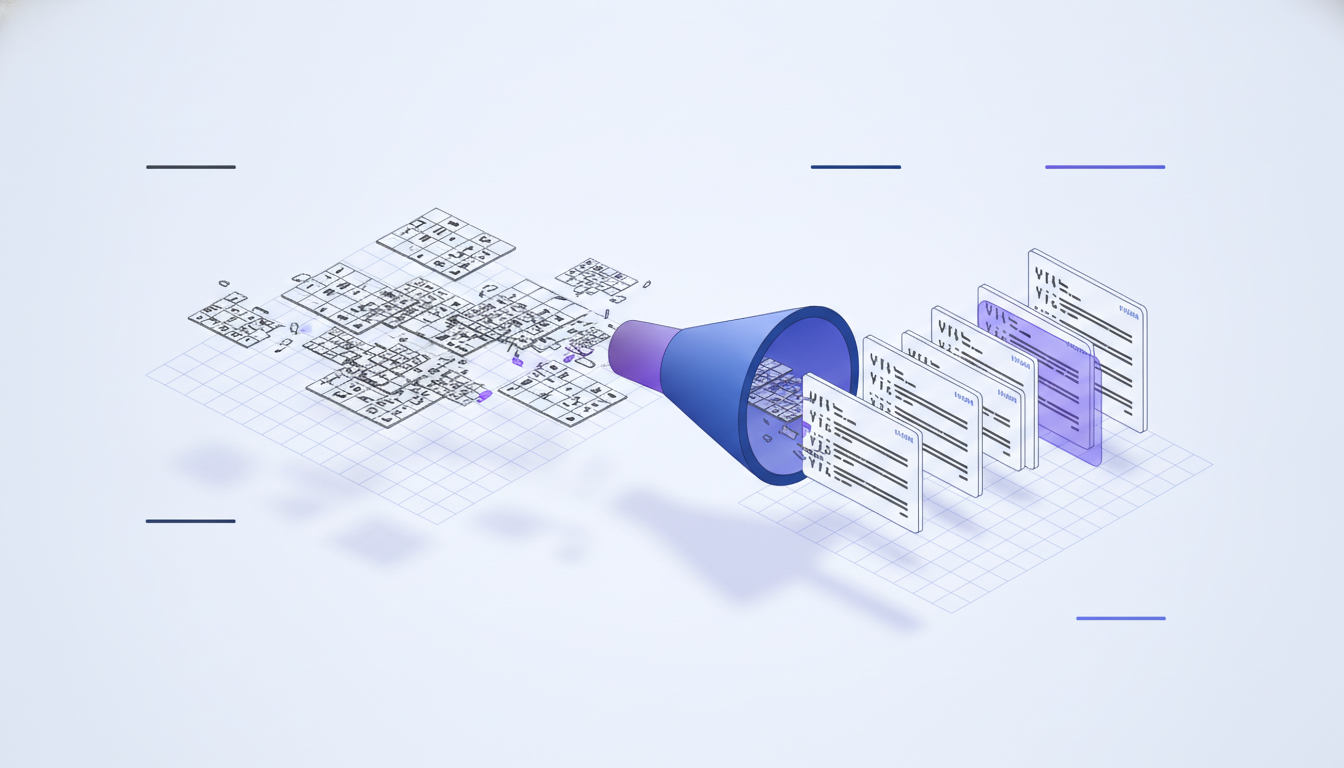
The failure mode it kills is the silent one: a null where a LOINC code should be, a truncated card number, a timestamp in the wrong timezone. Without a contract, that defect travels downstream, lands in a regulatory report, and you find out at the audit. With a contract, the producer's pipeline rejects the row at the boundary and the alert fires before the data moves.
This is not healthcare-only. The same mechanics apply to PCI DSS cardholder data, to SOX financial reporting, and to HR PII under GDPR and CCPA. We covered the field-level side of that in our guide to mapping HR data to CCPA and GDPR fields — a data contract is the enforcement layer on top of that mapping.
What goes into a data contract: schema, semantics, SLAs, and governance?
A complete data contract has four layers, and skipping any one of them produces a contract that passes validation and still fails compliance. Schema alone is not enough.
| Component | What it pins down | Regulated-data example | Failure mode if missing |
|---|---|---|---|
| Schema | Field names, types, nullability, constraints | FHIR resource fields, LOINC codes | Type drift breaks downstream joins |
| Semantics | Meaning, units, code systems, PII classification | Currency in cents, timestamps in UTC, PII flags | Two teams interpret "amount" differently |
| Quality | Thresholds, completeness, freshness | ≤0.1% nulls on required fields | Bad data passes silently |
| SLA | Latency, availability, retry policy | Batch delivered by 06:00 UTC | Consumer reads stale data |
| Governance | Named owner, retention, access, versioning | 7-year retention per HIPAA | No one accountable, no change history |
The Collate learning center's data contracts explainer breaks the same components down from the tooling side. The practical rule I settled on: if a field maps to a regulated standard, the contract must name the standard and the code system in the field definition — not in a README.
How do you implement data contracts in a data warehouse and pipelines?
You implement a data contract as a versioned, machine-readable file — JSON Schema, Avro, or Protobuf — committed to the same repository as the pipeline, and you run validation at the producer boundary before data lands in the warehouse. The contract is code, not documentation.
The sequence that works:
- Define the contract in a schema language that supports constraints, not just types.
- Register it in a schema registry or your warehouse's native contract support.
- Validate at write time — every batch, every stream, before insert.
- Version on every change, with semantic versioning.
- Notify consumers when a breaking change is proposed, before it ships.
The first time I tried this I got the order wrong: I wrote the contract after the pipeline, which meant the contract described whatever the pipeline happened to produce. That is documentation, not a contract. Write the contract first, then build the pipeline to satisfy it.
For the ingestion side of this, our HIPAA compliant data ingestion guide walks through the secure import path; the contract validation sits at the end of that path, right before the warehouse write.
How do you automate data contract validation with schema and quality checks?
Automation means the contract file is the source of truth for a validation step that runs on every batch or stream, and it fails loudly on violation. The checks are mechanical, so they belong in code, not in a review meeting.
| Check type | Mechanism | Regulated example |
|---|---|---|
| Schema validation | JSON Schema / Avro compatibility check | Required FHIR field present and typed |
| Quality | Null rate, uniqueness, referential integrity | LOINC code exists in the reference table |
| Freshness | Max age of data, delivery timestamp | PCI transaction data within SLA window |
| PII detection | Field-level classification flags | CCPA field flagged and masked before export |
The tooling in 2026 has consolidated: schema registries, open-source validators, and warehouse-native contract support cover most of this without a bespoke framework. If you are evaluating import tooling, our comparison of Flatfile and OneSchema alternatives for regulated industries covers where validation hooks live in each.
The rule that has saved me more than once: a validation failure must block or quarantine the row, never pass with a warning. Warnings get ignored; blocked rows get fixed. For financial reporting, we detailed the real-time side of this in our 2026 guide to real-time data validation for regulatory reporting.
Who owns a data contract and how do you manage change?
A named producer owns the contract, and a named consumer approves changes to it. Ownership is a person with a review SLA — not a team alias, and not a data governance committee that meets quarterly.
Change management is where contracts live or die. The mechanics:
- Semantic versioning: changing a field from optional to required is a major version bump, not a patch.
- Deprecation windows: a breaking change carries a notice period — 30 days is the minimum I would accept in a regulated environment.
- Consumer sign-off: the named consumer approves the change before it ships, and the approval is logged.
The trade-off is real: strict change control slows you down. The mitigation is to make non-breaking changes cheap — additive fields, relaxed constraints — so the heavyweight process is reserved for actual breaks. If you are mapping fields to PII classifications, the ownership model in our PII compliance mapping guide applies field-by-field to the contract.
How do data contracts provide audit-ready compliance evidence?
The versioned contract file, its validation logs, and its change history together are the evidence. An auditor asks "how do you know field X is always populated?" — you show the contract requiring it, the validation logs showing pass/fail per batch, and the alert history for the failures that were caught and fixed.
Three artifacts, retained:
- The contract file — every version, with timestamps.
- Validation logs — per batch or per stream, showing pass/fail and the failing rows.
- Change approvals — who approved what, when, and why.
Retention of these artifacts is itself a compliance requirement under HIPAA and PCI DSS, so the retention policy belongs in the contract's governance section, not in a separate document. The Atlan guide frames this as the governance layer of the contract — and that framing is correct: the contract is not just a schema, it is the record of an agreement that was made and kept.
What are the common pitfalls and trade-offs in data contract adoption?
The failures I have seen are consistent. Here is the short list, with the fix.
| Pitfall | Symptom | Fix |
|---|---|---|
| Contract as PDF in a wiki | Nobody reads it, nothing validates | Make it an executable file in the repo |
| Over-specifying | Every batch fails on a trivial rule | Tier the rules: hard blocks vs. monitored warnings |
| Under-specifying | Types validate, semantics drift | Name the standard and code system per field |
| No deprecation process | Consumers break silently on upgrade | Mandate notice windows and consumer sign-off |
| Ownership by committee | Changes take months, people bypass the process | One named owner, one named approver |
The honest trade-off: contracts cost velocity. Every validation rule is a chance for a batch to fail, and every change requires coordination. In a regulated environment that cost is the price of the audit evidence — but it is a real cost, and if you do not have a compliance obligation, you may not need this yet. Start with schema validation and add quality rules only where the regulator or the downstream report actually demands them.
If you are starting from a pile of CSVs and a compliance deadline, the fastest path is to map a file against a contract before you build the pipeline around it. Our schema mapper walks you from raw file to contract in one pass — start mapping a file at adaptivmapr.com.
FAQ
What is a data contract in data governance?
A data contract is a formal, versioned agreement between a data producer and a data consumer that specifies schema, semantics, quality thresholds, SLAs, and ownership. In data governance it is the enforcement mechanism that turns documented standards into validated, auditable behavior.
How do I implement data contracts in my data warehouse?
Define the contract as a versioned machine-readable file (JSON Schema, Avro, or Protobuf), register it in a schema registry or your warehouse's native contract support, and run validation at the producer boundary before data lands. Version every change and notify consumers before breaking changes ship.
Who should own a data contract?
A named producer owns the contract and a named consumer approves changes to it. Ownership is a person with a review SLA, not a team alias or a committee — committees are too slow for change control to work.
What tools support data contracts in 2026?
Schema registries, open-source validators, and warehouse-native contract support cover most needs without a bespoke framework. The Collate learning center and Atlan's tooling overview both survey the current options.
How do data contracts improve data quality?
They make quality thresholds explicit and enforceable: null rates, completeness, freshness, and referential integrity are checked mechanically on every batch or stream, and failures block or quarantine the data instead of passing silently. That is the difference between hoping the data is right and knowing it is.