Guide
Real-Time Data Validation for Financial Regulatory Reporting: A 2026 Compliance Guide
Real-time data validation for regulatory reporting: CDC pipelines, field-level rules, failure codes, audit evidence, and the trade-offs that matter in 2026.
- Published
- Reading time
- 10 min
PCI DSS v4.0's future-dated requirements became mandatory on 31 March 2025, and DORA has applied since 17 January 2025 — both moved validation from a quarterly exercise to a continuous one. Real-time data validation for regulatory reporting means checking each record as it changes, in the stream, against named rules, with a deterministic failure code and an immutable audit record for every decision. If you cannot name the field, the threshold, and the code, you have a report, not validation.
Key takeaways
- Validate in the change stream, not in the warehouse sweep. The record that fails should never reach the reporting store.
- Every rule needs three things: a field path, a versioned predicate, and a failure code. Rules without codes cannot be escalated or audited.
- Match latency to the rule class. Position-limit breaches need sub-second. Annual transaction reporting usually does not.
- Audit evidence is the raw event plus the rule version plus the decision. Store all three or you cannot reconstruct a submission.
- AI is useful for suggesting mappings and ranking anomalies. It is not the thing that produces your audit trail.
What Is Real-Time Data Validation for Regulatory Reporting?
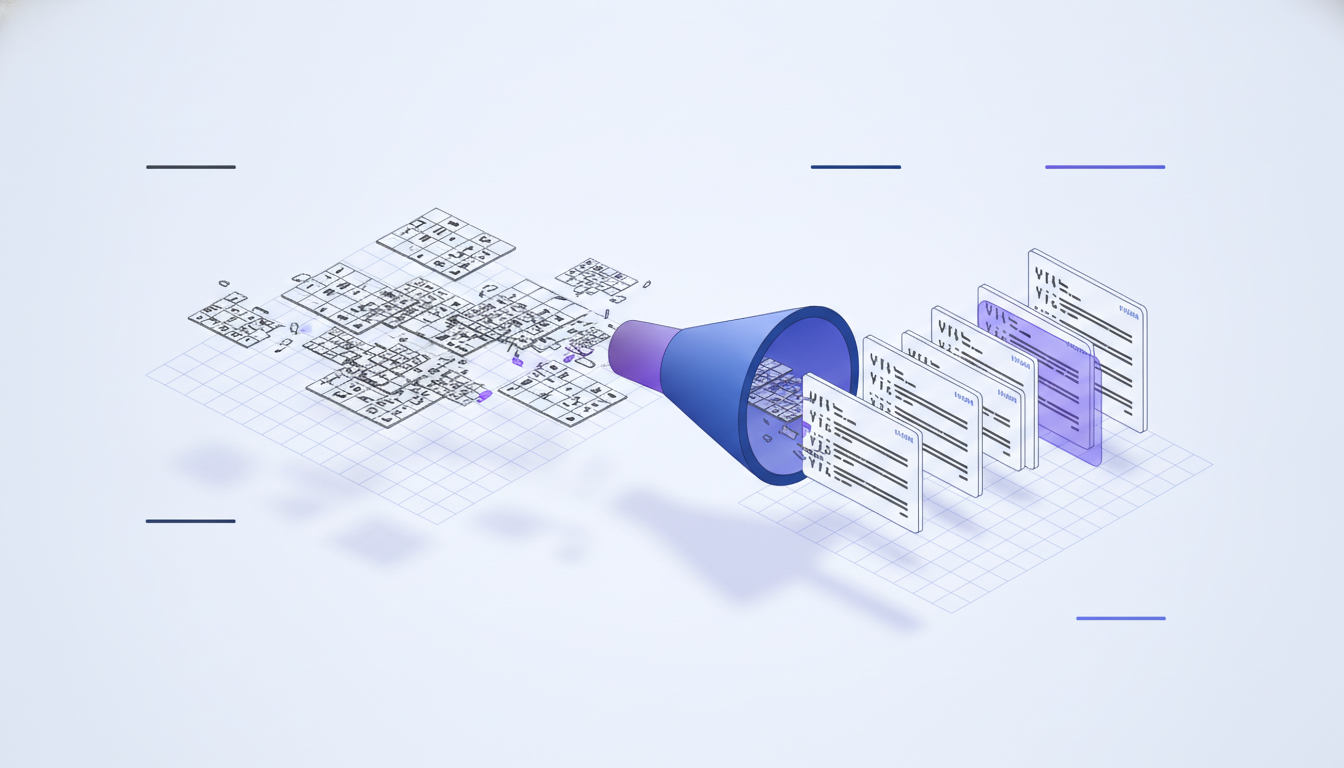
Real-time data validation is the evaluation of data quality, completeness and consistency rules against a record at the moment it is created or modified, before that record is persisted to the reporting store. In practice it runs inside a change data capture (CDC) stream, so the same event that updates the operational system also triggers the rule set.
The distinction that matters is where the failure lands. In a batch model, a bad record is discovered during the nightly reconciliation, after it has already been copied into three downstream tables. In a stream model, the record is quarantined at the boundary and the operational system gets a rejection it can act on.
That is the whole architectural argument. Everything below is detail.
Why Real-Time Data Validation Matters for 2026 Financial Compliance Deadlines
Because the reporting cadence has compressed while the underlying data volume has not. Regimes that once tolerated a monthly reconciliation now expect near-continuous evidence that controls are operating — DORA's operational resilience expectations and PCI DSS v4.0's continuous monitoring requirements both assume you can show control state on demand, not at quarter end.
There is a second, less discussed reason. Data quality is a precondition for any compliance or investigative work, not a parallel activity: if counterparty names, identifiers and dates are inconsistent across systems, no reconciliation, matching or investigation downstream can be defended. That point is made well in Data Ladder's analysis of why data quality is essential for compliance in security and investigations, and it holds whether the regulated data is trade data, cardholder data or HR records.
The practical consequence: remediation cost scales with distance from the source. A field fixed at ingest costs one edit. The same field fixed after it has propagated into a submitted report costs a resubmission, a control failure note, and a conversation with your regulator.
What Are the Core Components of a Real-Time Regulatory Reporting System?
Four components, and you can name them in one breath: an ingestion path that captures every change, a rule engine that evaluates versioned predicates, a routing layer that separates accepted from rejected records with a code, and an audit store that keeps the evidence for both. Miss the fourth and you have a pipeline you cannot defend.
| Component | What it does | What breaks without it |
|---|---|---|
| Change capture | Emits one event per insert/update/delete | Silent drift between systems |
| Rule engine | Evaluates versioned predicates per event | Rules change with no record of which version ran |
| Routing + codes | Sends accepted to the store, rejected to quarantine | Bad records reach the report |
| Audit store | Keeps raw event, rule version, decision, actor | No reconstruction of a past submission |
Architectures built on stream processing engines follow this shape closely — ingest the change event, evaluate in flight, write validated and rejected records to separate sinks — which is the pattern described in Ververica's overview of real-time regulatory reporting in banking.
The one component teams skip is the audit store. It is also the only one you cannot rebuild retroactively.
How Do You Write Data Validation Rules for Financial Services?
Write them as a small set of named classes, each with a field path and a stable failure code. Resist free-text rule names; they do not survive a rule-engine migration. Six classes cover most financial reporting obligations.
| Rule class | Example predicate | Field path | Code |
|---|---|---|---|
| Presence | LEI required on every counterparty | Counterparty.LEI | VAL-101 |
| Format | LEI is 20 alphanumeric characters (ISO 17442) | Counterparty.LEI | VAL-102 |
| Referential | ISIN resolves in the instrument master | Trade.ISIN | VAL-201 |
| Cross-system | Booking notional equals reporting notional ±0.005 | Trade.Notional | VAL-301 |
| Temporal | Reporting timestamp within T+1 of execution | Trade.ExecTs | VAL-401 |
| Threshold | Single-name exposure exceeds 10% of tier 1 capital | Exposure.SingleName | VAL-501 |
Two rules of thumb from doing this repeatedly. First, keep tolerance explicit — ±0.005 is a decision, and someone will ask you to justify it. Second, version the rule set and hash it. When a regulator asks why a record passed in March and fails in October, the answer is a rule version diff, not a shrug.
For cardholder data, the same discipline applies to masking rules rather than format rules — the field-level techniques and their trade-offs are covered in our guide to data masking for PCI DSS 4.0.
How Do You Architect for Sub-Second Latency with CDC and Stream Processing?
You do not need sub-second for most regulatory rules. You need it for a specific subset: position-limit monitoring, fraud and AML screening, and any control where the cost of a late decision is a market or capital consequence. Everything else can run at micro-batch latency and nobody will notice.
The mechanism is straightforward once stated: CDC emits an event per row change, the stream processor keys it by entity, evaluates the rule set, and writes to two sinks. The engineering cost is not the processor. It is the state — referential checks need the instrument master, threshold checks need running exposure aggregates, and both need to survive a restart.
Practical guidance:
- Keep referential data in a compacted topic or a keyed state store, not a synchronous lookup per event.
- Separate stateless rules (presence, format) from stateful ones (referential, threshold) and scale them independently.
- Set an explicit late-event window. Records arriving after it go to quarantine with a code, not silently dropped.
- Instrument the pipeline for lag. A validation pipeline that is 20 minutes behind is a batch job with extra steps.
What Does Real-Time Compliance Monitoring Look Like in Practice?
It looks like a queue with owners and clocks. Every rejection gets a code, every code maps to a route, and every route has a response time. Without that mapping, "real-time monitoring" means a dashboard nobody opens.
| Code range | Meaning | Route | Target response |
|---|---|---|---|
| VAL-1xx | Field missing or malformed | Auto-quarantine, notify submitter | 4 hours |
| VAL-2xx | Referential failure | Block affected record, notify data steward | 1 business day |
| VAL-3xx | Cross-system mismatch | Page the data steward | 2 hours |
| VAL-4xx | Temporal violation | Hold record, flag for late submission | Same day |
| VAL-5xx | Threshold breach | Escalate to compliance officer | Immediate |
The failure mode I see most often is collapsing all of this into a single "validation failed" alert. It trains people to ignore the channel. Codes exist so that a missing LEI and a capital threshold breach do not share an inbox.
How Do You Produce Audit Evidence for Regulatory Reporting?
Keep four things per decision: the raw input event, the rule version identifier, the decision and code, and the actor or process that made it. That is the minimum set that lets you reconstruct any past submission without re-running the pipeline.
Write them append-only. If your audit store is a mutable table, a later correction erases the evidence that the original failure happened — and the failure is often the more important record.
Retention is set by the regime, not by your storage budget. MiFID II transaction records run to five years, with member states able to extend that. Check the specific obligation rather than picking a number that feels safe. The same provenance discipline applies outside finance: our developer's guide to mapping HR data to PII compliance under CCPA and GDPR walks through field-level provenance for personal data, where "why did this record change" is the question you get asked.
What Are the Trade-offs of Real-Time Validation vs Batch?
Real-time validation buys earlier detection and cleaner audit trails, and it costs you operational complexity, state management, and money. Batch buys simplicity and cheap reprocessing, and it costs you remediation distance. Pick per rule class, not per organisation.
| Attribute | Batch validation | Stream validation |
|---|---|---|
| Detection latency | Hours to days | Milliseconds to minutes |
| Remediation cost | Higher (propagated errors) | Lower (caught at boundary) |
| Infrastructure | Scheduled compute | Always-on stateful processing |
| Reprocessing | Trivial — rerun the job | Requires replay from the log |
| Rule changes | Redeploy nightly | Versioned, hot-swappable |
| Best fit | Periodic, aggregate reports | Limits, screening, continuous controls |
The honest verdict: most teams should run hybrid. Stream the rules where lateness has a consequence, batch the rest, and be explicit in your control documentation about which is which. Claiming "real-time" across the board without the state management to back it is a finding waiting to happen.
Where Does AI Fit in Regulatory Reporting?
AI is useful in two places and harmful in one. It is useful for proposing field mappings between source schemas and a canonical model, and for ranking anomalies so humans look at the likeliest failures first. It is harmful when it becomes the decision-maker, because a probabilistic judgement is not audit evidence.
Keep the boundary sharp: the model suggests, the deterministic rule decides, the audit store records. If a regulator asks why a record was accepted, "the model scored it 0.87" is not an answer. "VAL-301 passed against rule set v14" is.
This matters more as canonical models proliferate. Whether you are targeting FHIR resources or a financial reporting schema, the mapping layer is where AI earns its keep — the same way it does in CSV to FHIR mapping — while the validation layer stays deterministic.
How Do You Integrate Real-Time Validation into an Existing Reporting Framework?
Start with one report, one rule class, and one code range. Instrument it end to end before adding a second. The failure pattern is a team that builds a general-purpose rule engine for eighteen months and never validates a live record.
A workable sequence:
- Pick the report with the highest remediation cost, not the highest volume.
- Extract its existing manual checks into named predicates with codes.
- Stand up CDC for the two or three source systems that feed it.
- Run stream validation in shadow mode alongside the batch job for one full cycle. Compare outputs.
- Cut over the rule classes where shadow mode agreed. Leave the rest in batch.
- Version the rule set and start the audit store before cutover, not after.
If your bottleneck is the ingestion and mapping layer rather than the rule engine, it is worth knowing what the alternatives look like — we compared them in Flatfile and OneSchema alternatives for regulated industries.
The low-friction next step: take one file that currently fails validation, map it against a target schema, and see exactly which fields and codes it trips. You can do that at adaptivmapr.com before committing to any pipeline work.
FAQ
What is real-time data validation in regulatory reporting?
It is the evaluation of data quality and consistency rules against a record at the moment it changes, inside a CDC or stream pipeline, before the record reaches the reporting store. Each failure produces a named code and an audit record rather than a silent drop.
Do I need sub-second latency for regulatory reporting?
Usually not. Sub-second matters for position limits, fraud and AML screening, and controls where a late decision has a capital consequence. Periodic transaction and aggregate reports generally tolerate micro-batch or even T+1 validation, provided the audit trail is intact.
What are the benefits of automated regulatory reporting?
Earlier detection, lower remediation cost, versioned rule sets you can diff, and an audit trail that reconstructs a past submission without re-running the pipeline. The trade-off is always-on stateful infrastructure and the operational discipline to maintain it.
What should an audit record for a validation decision contain?
Four things: the raw input event, the rule version identifier, the decision with its failure code, and the actor or process responsible. Store them append-only, and retain them for the period the specific regime requires rather than a number chosen by feel.
Can AI replace rule-based validation?
No. AI can propose field mappings and rank anomalies for review, but a probabilistic score is not audit evidence. Keep the model in the suggestion layer and the deterministic rule in the decision layer, with the audit store recording which rule version ran.