Guide
Mapping Data for LLM Governance: Mitigating Privacy and Bias Risks in Regulated AI
Mapping data for LLM governance in regulated industries: privacy, bias, lineage, and compliance controls for healthcare, finance, and HR data.
- Published
- Reading time
- 7 min
Data mapping is the control layer for LLM data governance in regulated sectors. Without a field-level map of what enters the prompt, what the model returns, and how long logs are retained, you cannot prove privacy compliance or demonstrate bias mitigation. The map is not documentation theater; it is the audit trail.
Key takeaways
- Map every field that touches the model, including metadata and system prompts.
- Retain prompt and response logs long enough to satisfy your regulator, not your model vendor.
- Anonymization and synthetic data reduce exposure but do not remove the need for access controls.
- Bias checks belong in the data pipeline, not after a discrimination complaint arrives.
What does LLM data privacy actually require in regulated industries?
Sending a record to a model endpoint is a disclosure. If that record contains a patient’s diagnosis, a cardholder’s PAN, or an employee’s salary, you have moved regulated data out of your system of record and into a third-party inference environment. In my experience, teams treat the model as a black box and forget that the input side is still a data flow subject to HIPAA, PCI DSS 4.0, GDPR, or CCPA.
The first question is not “which model should we use?” It is “which fields are we allowed to send?” For healthcare, that means checking FHIR resources and LOINC codes before they reach the prompt. For finance, it means confirming PANs are rendered unreadable under PCI DSS 4.0 Requirement 3.4 before any transformation. For HR, it means mapping name, ID, and compensation fields to CCPA and GDPR categories.
Model size matters here. Smaller language models deployed on your own infrastructure usually present a smaller privacy surface than a general-purpose LLM called over a public API, which is why the privacy case for SLMs over LLMs deserves a hard look before you commit to a vendor endpoint (when to use LLMs vs SLMs for privacy and governance).
How do I identify and classify sensitive data for LLM training and inference?
Start with a data inventory, not a model prompt. List every table, file, and stream that could be ingested for fine-tuning, retrieval-augmented generation, or system instructions. Tag each field with its regulatory class: PHI under HIPAA, cardholder data under PCI, personal data under GDPR, or personal information under CCPA.
I have seen teams fine-tune a model on support tickets that included unredacted email addresses and partial credit card numbers because the ticket export was never classified. The fix is a pre-ingestion classification step that fails the build if a restricted field reaches the training set.
Use this classification as your mapping source of truth. A field tagged “restricted” should either be stripped, tokenized, or routed to a separate, non-model workflow. If you cannot name the regulation that permits a field in the prompt, do not send it. This is where schema mapping becomes a compliance control, not just an integration task.
For HR data specifically, the field-level mapping to CCPA and GDPR categories is a prerequisite before any LLM touches employee records (mapping HR data to PII compliance).
What does a safe LLM data pipeline architecture look like?
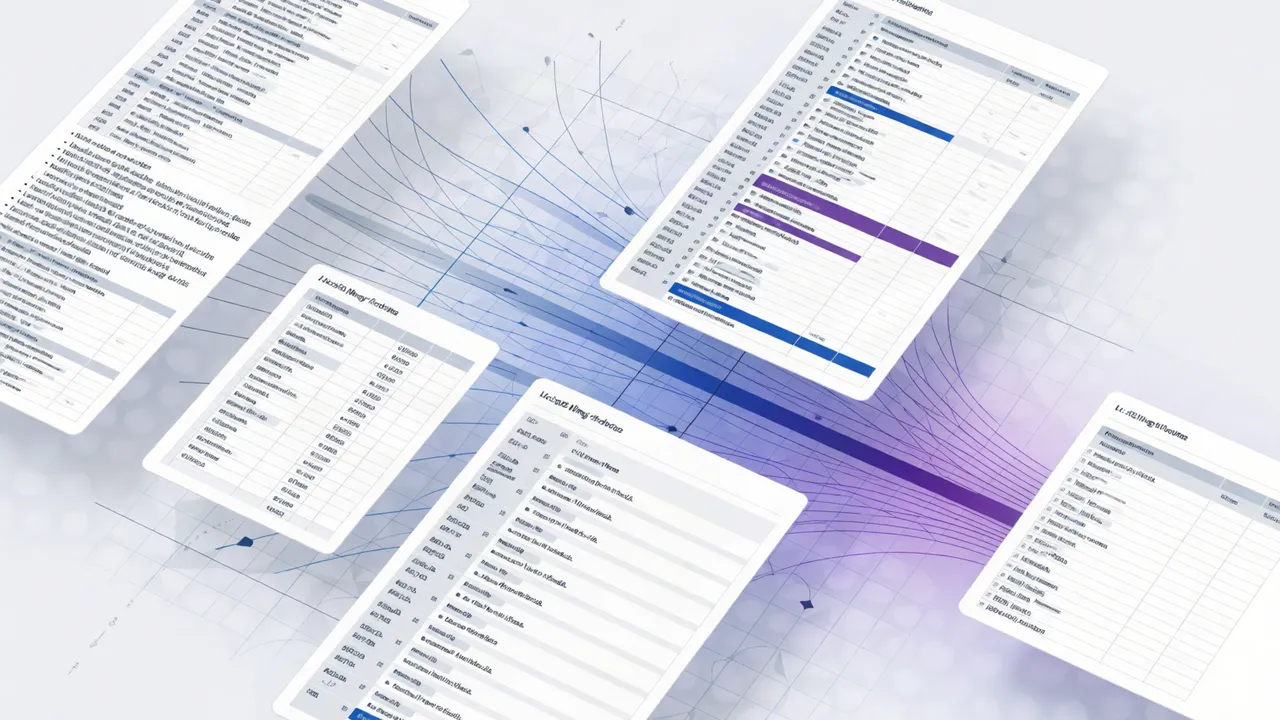
A safe pipeline has three zones: raw ingestion, governed transformation, and model interaction. Raw data lands in a staging store where it is classified and masked. Transformation applies your data map—renaming fields, dropping restricted columns, and converting formats. Only the cleaned, minimum-necessary subset reaches the model.
Here is the shape I look for in a request:
{
 "prompt": "Summarize the visit note for patient 99381.",
 "context": {
 "encounter_id": "enc-4421",
 "diagnosis_code": "E11.9",
 "note_text": "Patient reports stable glucose levels."
 },
 "governance": {
 "data_map_version": "2026.10.01",
 "retention_days": 90,
 "fields_redacted": ["patient_name", "mrn", "phone"]
 }
}
The response should carry the same provenance fields so you can trace an output back to the exact input version. If your architecture cannot attach a data map version to a prompt, you do not have governance; you have inference.
Data contracts help here. Define the contract between your source system and your model pipeline so schema changes break the build before they leak a new field into the prompt (data contracts for regulated data).
Which technical controls minimize data and anonymize it for LLM pipelines?
Data minimization means sending the fewest fields possible. If the model only needs a diagnosis code to generate a summary, do not send the full clinical note. Anonymization means removing or transforming direct identifiers so the remaining data cannot reasonably be linked to an individual.
| Data class | Typical regulation | Control before LLM | Minimum retention |
|---|---|---|---|
| Patient diagnosis, notes | HIPAA | De-identification or Safe Harbor removal | 6 years for disclosures |
| Cardholder PAN | PCI DSS 4.0 | Tokenization or masking (Req. 3.4) | 1 year for logs |
| Employee name, salary | GDPR / CCPA | Pseudonymization, access logs | Varies by jurisdiction |
For cardholder data, PCI DSS 4.0 requires masking or tokenization of PANs. I covered the trade-offs between reversible tokenization and irreversible masking in a previous piece (data masking for PCI DSS 4.0). For healthcare, HL7 FHIR resources let you carry structured clinical data while excluding free-text notes that often contain incidental identifiers.
Synthetic data is useful for regulated LLMs, but it is not a privacy panacea. If your synthetic generator learns correlations from real PHI, the output can still leak membership information. Use synthetic data for model training only after you have validated that re-identification risk is below your organization’s threshold, and keep the real data map governing what the synthetic data was derived from.
How do I trace data lineage for LLM explainability?
Lineage for an LLM pipeline means tracking a response back to the exact prompt, the prompt back to the source records, and those records back to the collection event. Without that chain, an explainable AI claim is just a statement.
I recommend storing three immutable artifacts for every inference: the input record version, the prompt template with variables resolved, and the model response. Include the data map version and the regulator-relevant retention period in the metadata. When an auditor asks why a model denied a loan or summarized a claim a certain way, you replay the map, not the model.
This connects directly to the lineage and audit trail work I wrote about previously (mapping data for AI governance). Explainable AI data mapping is not about interpreting neural weights; it is about knowing which input field influenced which output segment, and being able to prove it.
How do I quantify and mitigate bias through data mapping?
Bias in an LLM pipeline usually starts in the data map. If your training or RAG corpus over-represents one demographic and under-represents another, the model’s outputs will reflect that skew. Mapping lets you see the skew before the model does.
Tag records with protected attributes where lawful and necessary—age bands, gender, zip code prefixes—then run validation checks on the distribution of those attributes in the data sent to the model. If a small cohort is over-represented in your prompts relative to the source population, the map will show it.
Mitigation is not “debiasing the model” after the fact. It is rebalancing the mapped dataset, adjusting retrieval weights, or excluding fields that act as proxies for protected classes. Validation should run in CI so a drift in input distribution fails the pipeline before it reaches production.
What compliance reporting does LLM data handling require?
Regulators do not ask for your model weights. They ask for your data handling records: what was collected, where it went, who accessed it, and how long it was kept. Your LLM data map should generate that report automatically.
For financial regulatory reporting, this means validation checks that fail when restricted fields appear in model logs (real-time data validation for financial regulatory reporting). For healthcare, it means an accounting of disclosures that includes model inferences. For HR, it means demonstrating that employee data was not used for secondary purposes without consent.
Compliance frameworks such as NIST AI RMF and ISO 42001 give you the structure, but the evidence is in your field-level logs. If your map cannot produce a field-level export for a specific date range, you are not audit-ready.
How do I integrate AdaptivMapr into your LLM data governance strategy?
AdaptivMapr is built for exactly this kind of regulated-data mapping. You connect your source systems, define the fields that may flow to an LLM, and enforce transformations before inference. The platform tracks schema versions and retention rules so your map stays current as source systems change.
If you are evaluating where to start, map one high-risk pipeline first—typically the one handling PHI, PAN, or HR records. Run it through AdaptivMapr’s validation rules, export the field-level lineage, and use that output as your compliance artifact.
Map a file with AdaptivMapr or read the docs to see how the mapping rules are defined.
FAQ
How is data mapping different from data governance for LLMs?
Data mapping is the technical mechanism that identifies which fields move between systems; governance is the policy that decides whether they should. You need the map to enforce the governance.
Can anonymized data still be re-identified in an LLM context?
Yes. Anonymized fields can be re-identified through model inference, especially when combined with other prompt context. Treat model outputs derived from anonymized data as potentially identifiable until proven otherwise.
Do I need a data map if I use a private or local model?
Yes. Deployment location does not change regulatory obligations. A local model still ingests regulated data and produces logs that auditors will want to trace.
What retention period should I use for LLM prompt logs?
Use the retention period required by your sector’s regulator, not the default offered by your model provider. HIPAA-related disclosures often require six years; PCI and GDPR contexts vary by jurisdiction and use case.
How do I start mapping data for an LLM pipeline today?
Inventory every field that could reach a prompt, tag it by regulatory class, and block any restricted field that lacks a documented transformation. Start with one pipeline and expand once the map is stable.